A tide indicator in sandy tan and deep blue, three notches on a caseback, a black dial that looks different when tilted: the details that distinguish a vintage watch aren’t always obvious in a single photograph. In Vintage Watches: The Modern Guide, dealers Eric Wind and Charlie Dunne explain what draws them to six favorites, with photographs by James Fisk.
Wind and Dunne set the book’s price at $60 to make it accessible to newcomers. Alongside questions to ask before buying a vintage watch, it includes accounts from collectors David Chang, Ronny Chieng and Daniel Dae Kim. The authors applied the same thinking about affordability to their selection: two six-figure watches share the cover, but one of Wind’s own favorites sells for a little over $1,000.
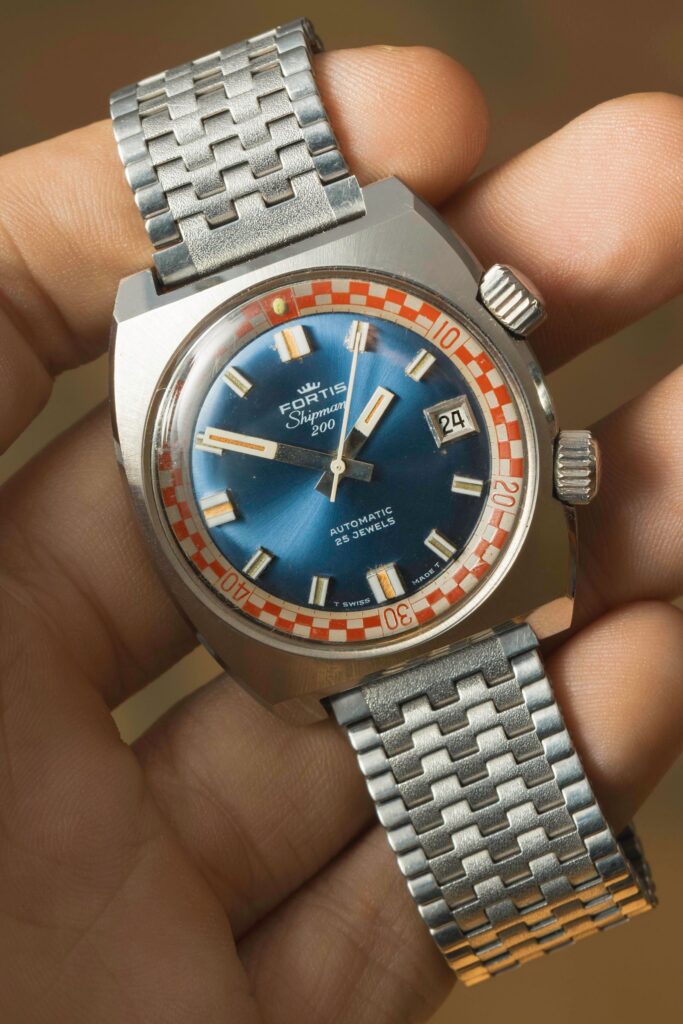
Fortis Shipman 200
Dunne pushed to include the Shipman 200, an example Wind had owned for several years. Its appeal to them had little to do with historical importance or a famous former owner. As Dunne put it, “You want to have very, very serious watches in your collection, but you also want to have things that put a smile on your face at any price point.”
Audemars Piguet ref. 5516
The 5516 shares the cover with a Rolex “Paul Newman” Daytona. While the Daytona’s nickname points to the actor whose own watch sold for $17.8 million, the feature Wind singles out on the Audemars Piguet is a leap-year indicator at the bottom of the dial. According to Wind, Audemars Piguet beat Patek Philippe to that feature by more than 20 years. Only nine examples of the 5516 were made. Wind sold the one pictured in the book for $545,000 at Christie’s in 2015.
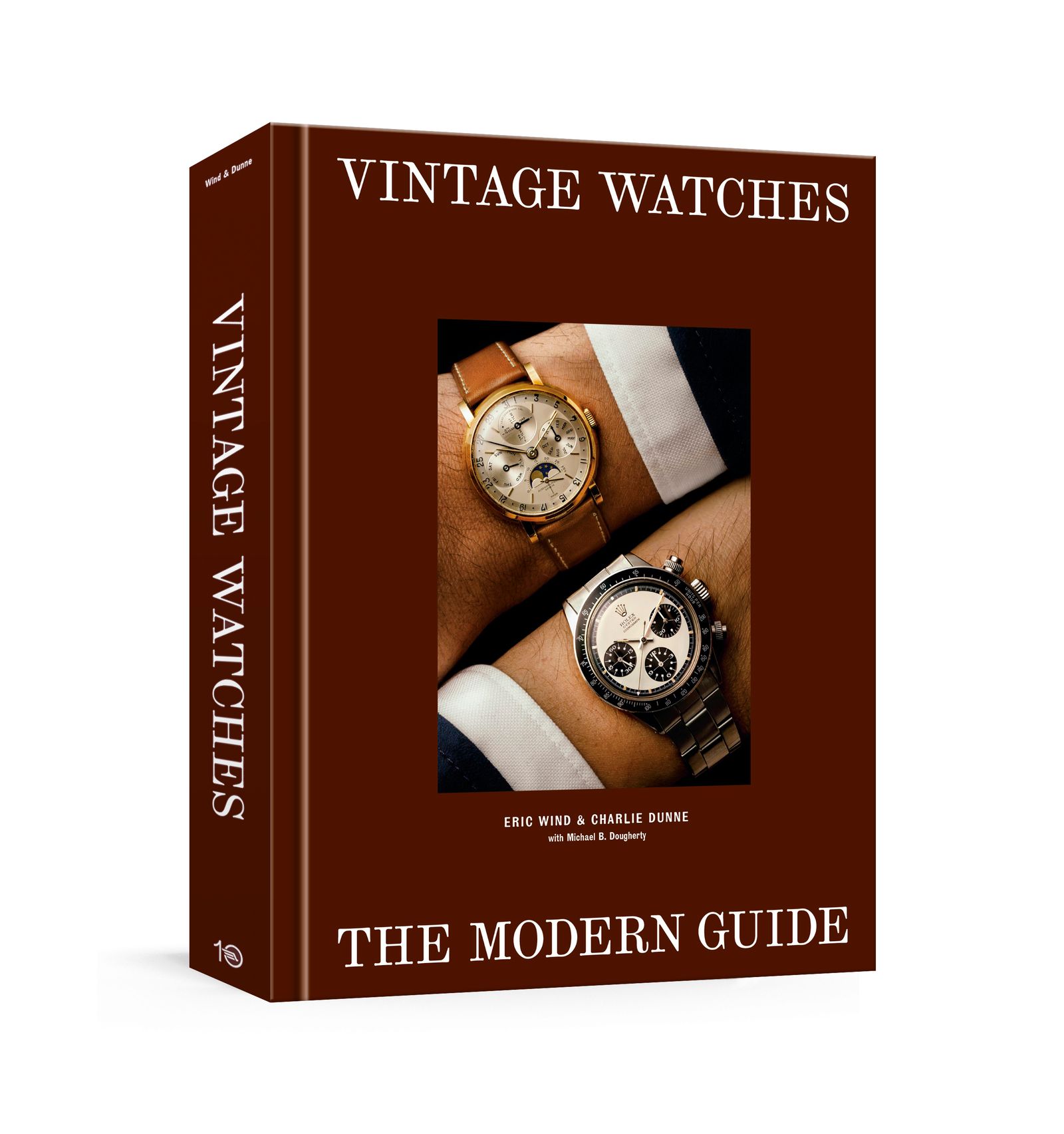
Heuer Seafarer ref. 346
Heuer made Seafarers for Abercrombie & Fitch in the late 1940s and early 1950s. On the ref. 346, a tan-and-blue subdial at nine o’clock indicates the tide. Its colors stand out against an eggshell-white dial that survived in pristine condition because the original owner left the watch unworn in a drawer for decades. When Wind arranged to acquire it, he sent a friend to collect it at a diner in the owner’s home state of Arizona.
Longines Tre Tacche
Fisk spotted a collector wearing this 1940s Longines at the Waldorf Astoria in New York and had to find enough light in the hotel bar to photograph it. Such encounters are why he carries about 40 fabric swatches to use as backdrops.
The detail behind the Tre Tacche nickname is on the reverse: three notches gave watchmakers a grip to screw the caseback down tightly and help keep out water and dust. Wind sees the case as characteristic of Longines’s prominence in tool watches in the 1930s and 1940s, when many aviators and pioneers wore the brand.
Patek Philippe ref. 96
Patek Philippe made many versions of this dress watch. Wind and Dunne both wish they could have back the glossy black-dial example they sold. To show what they saw in it, Fisk photographed the watch from two angles, giving readers something closer to the experience of tilting it back and forth in their hands.
Rolex GMT-Master ref. 1675
The last watch added to the book belonged to its photographer. Fisk’s GMT-Master is a ref. 1675, which Rolex produced from 1959 to 1980. Earlier GMT-Masters had bezels prone to cracking and contained hazardous amounts of radium. Among vintage collectors, the later 1675 came to represent the classic look of the model. Dunne recalled that the pages were already being printed when he and Wind emailed the publisher to stop and make room for Fisk’s watch.