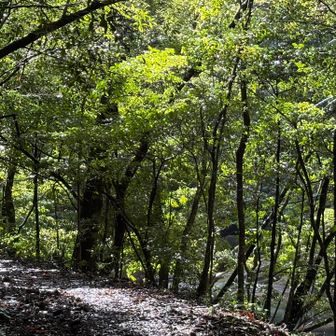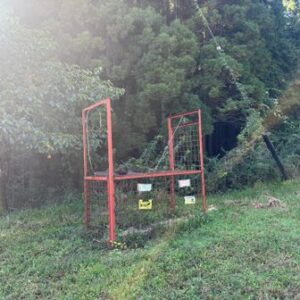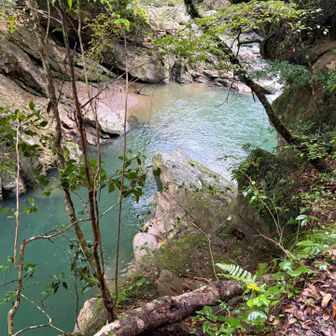
A YAMAP activity log published on 11 November 2026 describes a walk in Kaeda Valley, filed on the map for Boroishi-yama, Hanakiri-yama and Iwatsubo-yama. The author writes that the autumn flowers had finished and winter flowers had begun to bloom, and that the valley was explored slowly. The recorded checkpoints are valley points; the log does not list the three peaks as reached.
Recorded activity
- Moving and total time: 3 hours 59 minutes
- Rest: 13 minutes
- Distance: 11.1 km
- Ascent / descent: 338 m / 335 m
- Course constant: 13, rated ordinary, calculated from a standard time of 4 hours 12 minutes
The named stops run out and back from the Hyotanbuchi trailhead, by way of the Iodani rest shelter, the Hirogawara rest shelter, a multipurpose plaza and the Heisei trail entrance, then back through the same points to the trailhead. An average pace is mentioned on the page, but no pace figure is given in the text.
Flowers
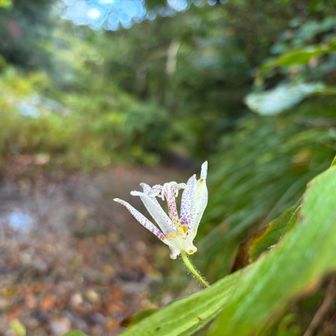
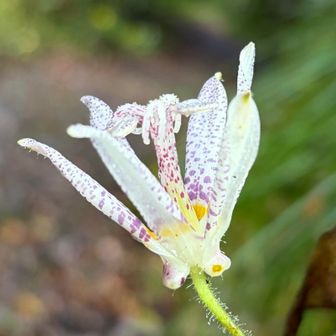
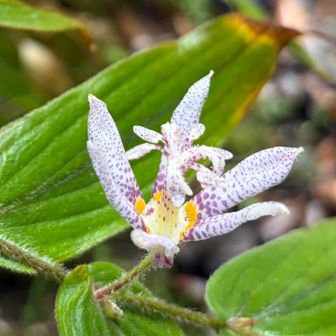
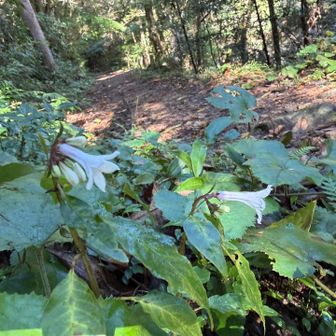
At Hyotanbuchi, one toad lily (hototogisu) was still flowering. The captions call it the last flower of the season and look ahead to next year.
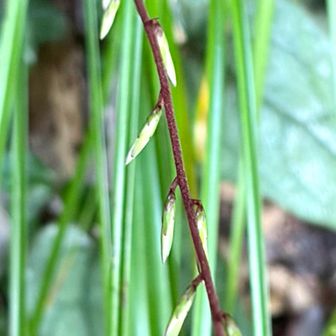
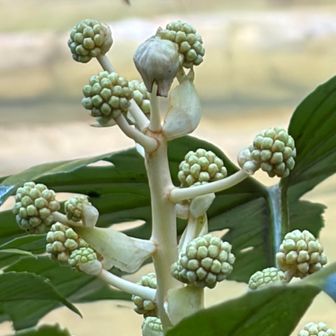
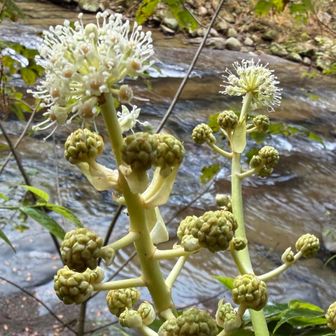
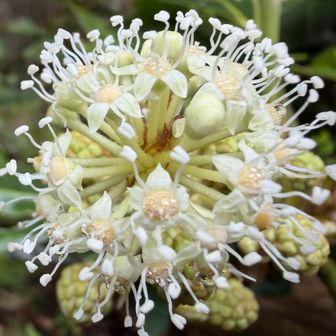
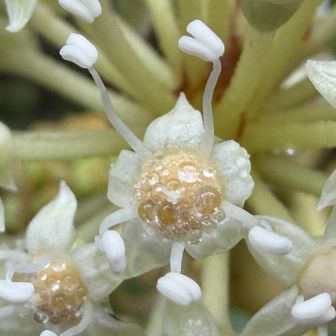
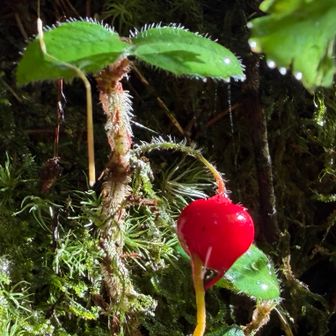
Maruba-teishoso was still in bud. Yatsude (Fatsia japonica) was starting to bloom from the top of the cluster; one flower had just opened, with long, curling stamens. Tsurukoji was bearing red fruit.
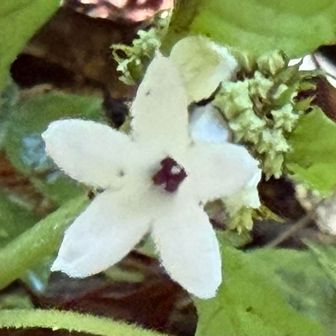
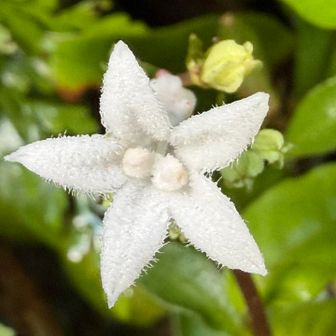
Satsuma-inamori had begun to flower. The author reports two forms on close inspection, and says this pattern is called heterostyly:
- Short-styled flowers, in which dark purple anthers show from the corolla and a thin stigma sits at the center.
- Long-styled flowers, in which a stout, two-lobed pistil projects outward.
The names are given as what these forms are said to be called.
Fungi
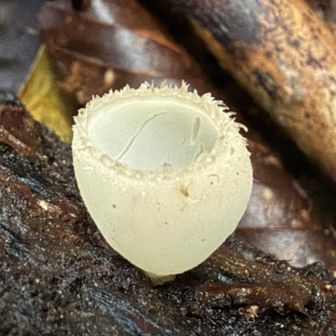
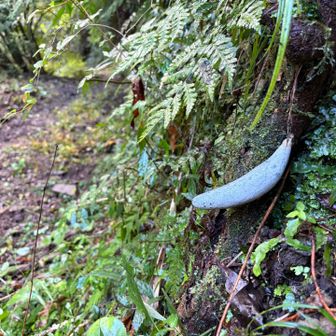
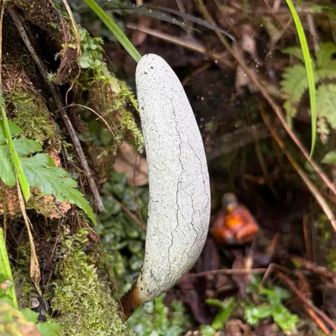
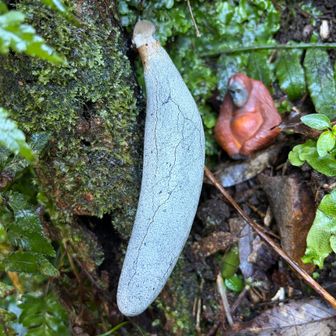
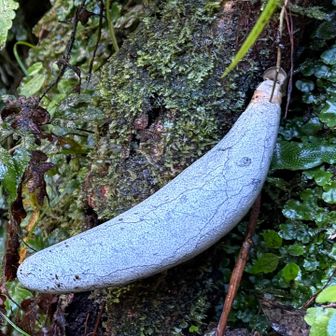
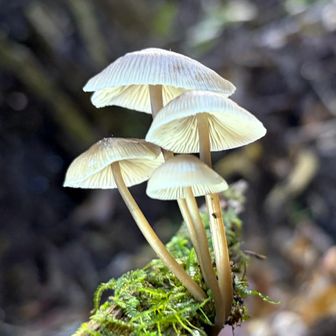
A last white cup fungus (shirokopputake) was still intact. A white hamakitake is pictured, and a very large white hamakitake that the author says was standing three weeks earlier had snapped. The caption suggests it may have grown too large and broken under its own weight, and jokes that the fallen fungus looked like a white banana “standing in Kaeda.”
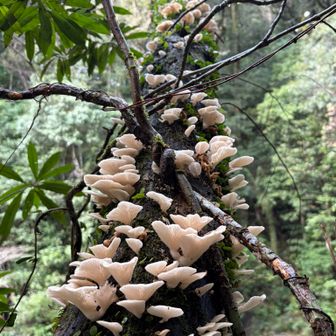
A place the author says was covered in wood ear (arage-kikurage) two weeks earlier was, on this visit, covered in oyster mushrooms (hiratake). The caption calls it a complete changeover; an earlier photo of the wood ear is included.
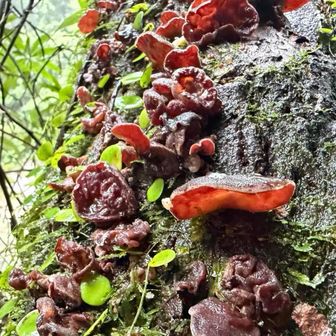
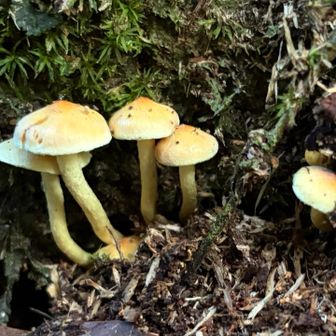
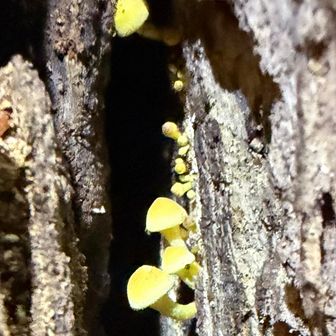
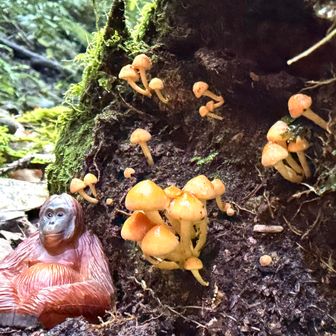
Other captions show a dark, petal-like fungus recorded as kurohanabiratake; a possible nigakuritake, marked with a question mark; many small mushrooms; and a possible nameko, also marked as uncertain. Sunlight is noted later on the walk.
Original activity log: https://yamap.com/activities/52607618